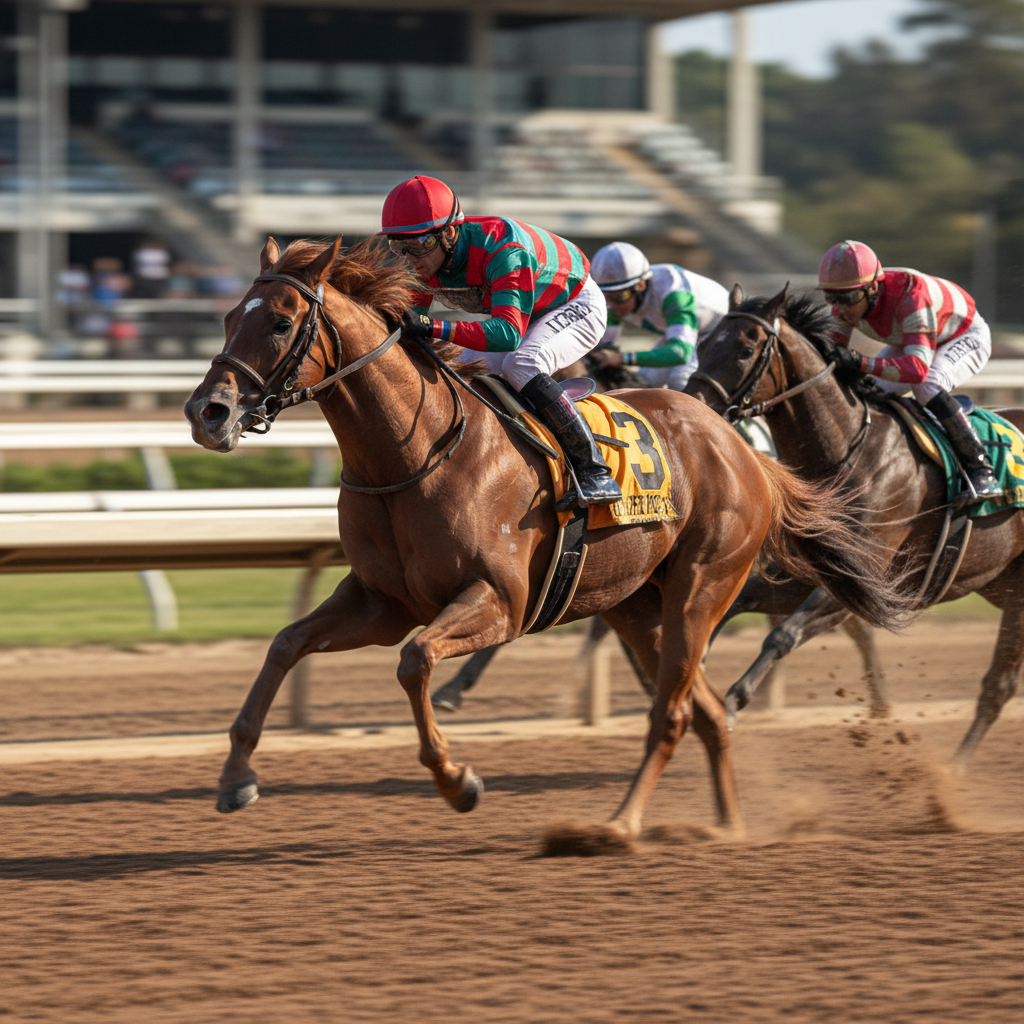
The Art of the Jockey: What Makes a Great Rider
115 Pounds of Strategy and Courage
The jockey may be the smallest person at the racetrack, but they carry the weight of every bet, every dream, and every race. Weighing in at roughly 115-120 pounds, jockeys are elite athletes who combine strength, timing, strategy, and courage in a job where every decision happens in a fraction of a second.
More Than Just a Passenger
A common misconception is that the horse does all the work. In reality, the jockey's role is pivotal. A great rider can get a horse home when a lesser rider would finish fourth. A poor ride can cost a talented horse the race.
The jockey must:
- Judge pace: Know how fast to run early without burning out the horse.
- Read the race: Anticipate what other riders will do and position accordingly.
- Find a path: Navigate through traffic, finding running room in a field of 10 or more horses.
- Time the move: Know exactly when to ask the horse for its best effort.
- Communicate: Through hands, legs, and weight, guide the horse without fighting it.
The Physical Demands
Jockeys are among the toughest athletes in any sport. They must maintain their weight — often around 115 pounds — year-round. Many rise before dawn to exercise horses in the morning, then ride in 8-9 races in the afternoon. During a race, they're perched on a 1,000-pound animal running 35-40 mph, absorbing incredible forces.
The risks are real. Jockeys suffer concussions, fractures, and worse. Every race carries the danger of a fall. Despite this, the great riders compete for decades, combining physical toughness with mental sharpness.
Reading a Race: The Jockey's Mind
Top jockeys are chess players on horseback. Before a race, they study the field and know which horses have early speed, which like to come from behind, and which tend to drift out in the stretch. Based on this, they form a plan.
But plans change the moment the gates open. A jockey might intend to sit just off the lead, only to find two horses battling for the front. Now they must adapt — press the pace, settle further back, or try to slip through on the rail. The best jockeys make these decisions in milliseconds.
Positioning: The Geometry of Racing
A jockey's position in the field is crucial. Being trapped on the rail with horses in front and beside is called being "in a box." Breaking out of a box costs ground and energy — the horse must be checked or steered wide. Great jockeys anticipate traffic and position their horse where running room will open.
Running wide on turns costs ground too. A horse that races three wide around both turns runs significantly farther than a horse that saves ground on the rail. The difference can be the margin of victory.
The Finish: Timing the Ask
Perhaps the most critical skill a jockey has is knowing when to ask the horse for its maximum effort. Horses have a limited reserve of top-speed running. Ask too early, and the horse tires before the wire. Ask too late, and the horse doesn't have enough distance to catch the leaders.
The great jockeys have an innate feel for this. They sense the horse's energy under them, gauge the distance remaining, and time their move with precision. Watching a top rider like Irad Ortiz Jr. or Flavien Prat thread a horse through traffic and time the final push is watching artistry in motion.
Jockey Stats That Matter
When handicapping, jockey statistics can provide an edge:
- Win percentage: The overall rate at which the jockey wins. Top riders win 18-25% of the time.
- In-the-money percentage: How often they finish first, second, or third.
- Performance on specific surfaces: Some riders excel on turf, others on dirt.
- Trainer-jockey combinations: When a top trainer uses a specific jockey, it's a signal.
- Recent hot streaks: Jockeys can go on rolls where everything goes right.
The Superstars
Racing has always had marquee riders. Historical greats like Bill Shoemaker (8,833 wins), Laffit Pincay Jr., and Pat Day set records that stood for decades. In the modern era, riders like:
- John Velazquez: A Hall of Famer with Breeders' Cup and Triple Crown wins.
- Irad Ortiz Jr.: Multiple-time Eclipse Award winner as outstanding jockey.
- Flavien Prat: Known for his tactical intelligence and big-rise performances.
- Joel Rosario: A brilliant big-race rider.
These riders command respect — and their mounts are always worth a second look when handicapping.
The Unsung Heroes
While the stars get the headlines, the journeymen jockeys are the backbone of racing. These riders compete day in and day out, often without the best mounts. When a journeyman lands a live longshot, it's one of racing's most satisfying outcomes.
Respect the Rider
Next time you're handicapping, don't just look at the horse. Look at who's riding. A top jockey on a live horse can turn a fourth-place finish into a winner. The rider is the difference between a horse's talent and its results.
Our AI picks factor in jockey data alongside past performances and pace analysis. Check our daily picks for recommendations across major US tracks.
Want premium picks with higher confidence?
Upgrade to Premium
