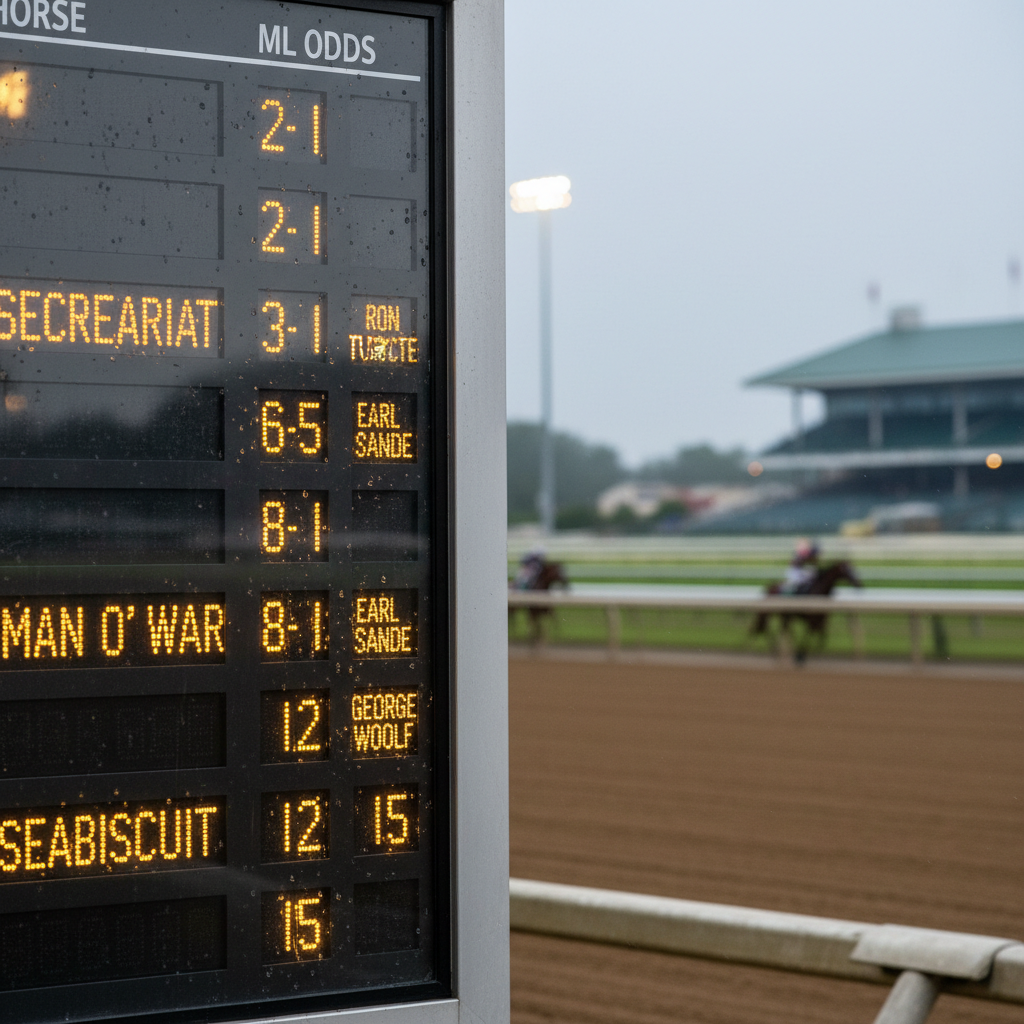
Reading the Morning Line: A Bettor's Guide to Racing Odds
Understanding the Numbers That Shape the Race
If you've ever looked at a racing program and felt overwhelmed by the numbers next to each horse's name, you're not alone. The morning line is one of the most important — and most misunderstood — tools in horse racing betting. Let's break it down.
What Is the Morning Line?
The morning line is a set of odds assigned by a track's official handicapper before the day's races. It's published in the racing program — sometimes called the "Daily Racing Form" or track program — and represents the handicapper's prediction of how the public will bet the race.
Here's the key point: the morning line is not the handicapper's prediction of who will win. It's a prediction of how the betting public will wager. A horse listed at 2-1 on the morning line isn't necessarily the best horse — it's the horse the oddsmaker believes will attract the most money.
How to Read the Odds
Odds in horse racing are expressed as fractions. Here's what they mean:
- 2-1 (two-to-one): For every $1 you bet, you win $2 in profit. A $2 bet returns $6 total ($4 profit + your $2 stake).
- 5-1: A $2 bet returns $12 ($10 profit + $2 stake).
- 9-2: Equivalent to 4.5-1. A $2 bet returns $11.
- 1-1 (even money): A $2 bet returns $4 ($2 profit + $2 stake).
- 3-5 (odds-on): A $2 bet returns $3.20 ($1.20 profit). You're betting more than you can win.
Morning Line vs. Actual Odds
The morning line is set the day before the race. Once betting opens, the actual odds — called the "live" or "current" odds — fluctuate based on how the public bets. If a horse opens at 5-1 on the morning line but attracts heavy betting, the odds might drop to 2-1 by post time.
This is where opportunity lies. If you can identify horses whose morning line is too high — meaning the public is undervaluing them — you can find overlays: horses offering better value than their true chances suggest.
Finding Value
The professional bettor's goal is to find discrepancies between the morning line and their own assessment. Here's a simple approach:
- Assess each horse's chances independently. Based on past performances, speed figures, and pace, assign your own odds to each horse.
- Compare to the morning line. If your assessment gives a horse a 20% chance of winning (true odds of 4-1) but the morning line is 8-1, that's a potential overlay.
- Watch the live odds. If the morning line holds or drifts higher, it confirms the public agrees the horse is a longshot — potentially confirming your value play.
The Favorite-Longshot Bias
One well-documented phenomenon in racing is the favorite-longshot bias. Studies show that favorites win more often than their odds suggest, while longshots win less often than their odds imply. In other words, betting longshots systematically is a losing strategy over time.
This doesn't mean you should only bet favorites. It means you should be realistic about longshots' chances and not be seduced by big numbers. A 30-1 shot is 30-1 for a reason.
Common Morning Line Mistakes
- Taking the morning line as gospel. It's one person's opinion. Do your own homework.
- Chasing big prices. Yes, 50-1 shots hit sometimes, but they're rare. Value comes from moderate overlays, not lottery tickets.
- Ignoring odds-on favorites. A horse at 3-5 might not pay much, but if its true chance is 60% (should be 2-3), it's still value.
- Forgetting the takeout. The track takes a percentage of every pool. You're not betting against the horses — you're betting against the other bettors plus the house edge.
Putting It All Together
The morning line is a starting point, not a finish line. Use it as a reference, form your own opinions, and look for value where the public hasn't found it yet. That's the essence of profitable horse racing betting.
Looking for AI-powered analysis that identifies value plays? Check our daily picks for expert recommendations across major US tracks.
Want premium picks with higher confidence?
Upgrade to Premium
