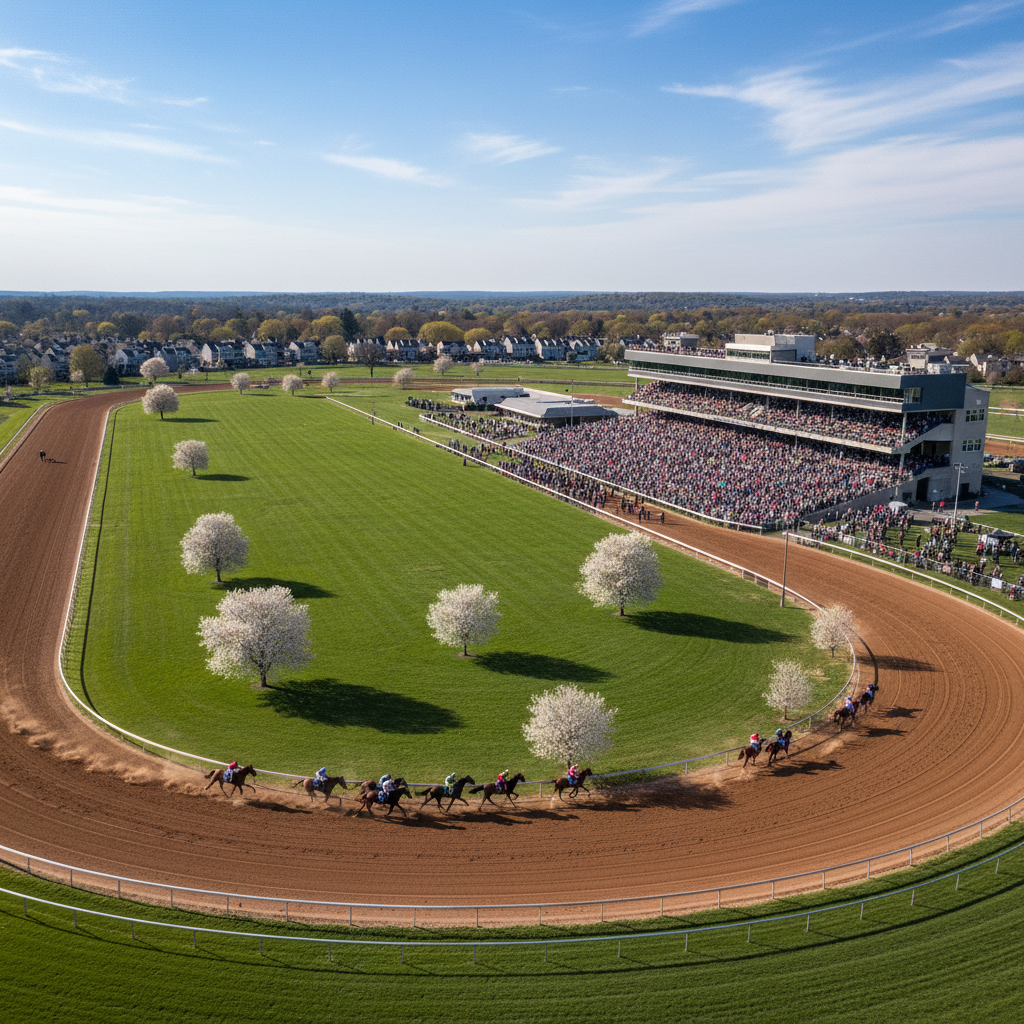
Preakness at Laurel Park: What the Historic Venue Change Means for Bettors
Preakness at Laurel Park: What the Historic Venue Change Means for Bettors
For the first time in the Preakness Stakes' 153-year history, the race will not be run at Pimlico Race Course in Baltimore, Maryland. With Pimlico undergoing a long-planned $400+ million renovation, the 2026 edition moves down the road to Laurel Park — and that change has significant implications for how you should handicap the race.
Why the Move?
Pimlico has been in need of a major overhaul for years. The infrastructure was aging badly, and the state of Maryland finally approved plans to fully modernize the facility. Once complete, Pimlico is expected to re-emerge as one of the premier racing venues in North America. But that takes time — and the 2026 Preakness couldn't wait.
Laurel Park, located in Prince George's County just outside Washington D.C., steps in as a capable host. It's an established Grade I-caliber facility with a solid dirt track that has hosted some important races in recent memory.
How Laurel Park Differs From Pimlico
Track Configuration
Both tracks are one-mile ovals at their core, but their quirks differ:
- Pimlico is known for its tight turns and compact layout. Speed horses that can get to the front early have historically performed well.
- Laurel Park features a slightly more gradual turn configuration. Horses that need to run wide or make a late sustained run tend to perform a touch better here than at Pimlico.
Track Surface
Laurel's dirt surface tends to play fair — neither strongly speed-favoring nor bias-free. The key variable, as always, will be recent weather and the condition of the track on race day.
Distance is the Same
The good news: the race is still being run at 1 3/16 miles. The distance has not changed, so stamina requirements remain identical.
What It Means for Your Handicapping
Favor closers slightly more than usual. Laurel's more gradual turns benefit horses who run from off the pace. At Pimlico, speed was king. At Laurel, the setup is more neutral — but if anything, late-running horses get a slight bump.
Watch the track condition report closely. A fast, firm Laurel track favors closers. A sloppy or muddy track tends to flip things and benefit front-runners who can get into a rhythm early and never look back.
Post position matters — but not as much. At Pimlico, inside posts near the rail could be a trap due to the tight first turn. At Laurel, posts 5-10 are generally the sweet spot. Posts 1-3 aren't a death sentence here.
Experience at the venue is irrelevant. No horse in this field has a meaningful Laurel Park record to handicap off — so that edge is neutralized entirely. Form, class, and connections become even more important.
The Bottom Line
The move to Laurel Park levels the playing field in some ways and rewards traditional handicapping. Don't overcomplicate it: class, pace scenario, and connections will tell you most of what you need to know on Saturday.
Pimlico will be back in 2027, bigger and better than ever. But for now, Laurel Park is ready for its moment in the spotlight — and so are 14 of the best three-year-olds in training.
Want premium picks with higher confidence?
Upgrade to Premium
